
Mahindra Group Chairman Anand Mahindra announced the company would adopt an 'attack mode' strategy, accelerating investment, innovation, and execution to capitalise on opportunities arising from prolonged geopolitical and economic uncertainty.
India's foreign exchange reserves increased by $9.9 billion to $716.9 billion for the week ended August 14, as reported by the Reserve Bank of India (RBI). This surge follows a previous jump of $14.14 billion in the week prior, indicating a robust recovery after a period of decline earlier this year.
Sridhar Vembu, Zoho Corporation Founder, states that the IT industry is not generating new jobs due to funds being redirected towards the escalating costs of AI and data centre infrastructure. He highlights a structural economic challenge where advanced technology, while making goods affordable, creates income distribution issues and suggests that solutions like Universal Basic Income might gain traction, especially in countries like India.

Shiprocket plans to allocate a significant portion of its IPO proceeds towards artificial intelligence (AI), aiming to evolve its e-commerce enablement platform into a comprehensive operating system for merchants, enabling conversational commands and reducing manual tasks.

Is the current rally telegraphing a durable peace plan in West Asia, boosted by United States (US) President Donald Trump's incoherent and contradictory posts on social media?

The Ministry of Heavy Industries (MHI) anticipates disbursing approximately 4,700 crore in incentives under the automotive PLI scheme in FY27, more than double the previous two years, while also exploring financing mechanisms for electric buses and trucks and promoting domestic manufacturing of critical EV components.

Indian benchmark indices, Sensex and Nifty, closed lower, primarily due to a downturn in banking and financial stocks, coupled with crude oil prices remaining above USD 80 per barrel. Geopolitical uncertainties and new regulatory proposals for the non-bank lending sector also contributed to cautious investor sentiment.

Indian stock market indices closed on a mixed note, with the Sensex gaining 374 points driven by buying in Reliance Industries and ICICI Bank, while the Nifty remained flat. This divergence is attributed to a new Closing Auction Session (CAS) mechanism introduced by stock exchanges, impacting market liquidity and price discovery.

Karnataka Chief Minister D K Shivakumar announced the establishment of India's first government-driven Artificial Intelligence University and an AI Hub in Bengaluru. This initiative aims to position Karnataka as a global leader in responsible AI innovation, fostering talent, research, and collaboration. The state seeks to become an AI-native state, leveraging AI to improve governance and daily life across various sectors.

'Healthy double-digit returns are still possible, though a sharp rally is unlikely.'

Cricket's inclusion in the 2028 Los Angeles Olympics is a strategic move by Olympic leaders to tap into India's massive fan base and commercial power, aiming to attract billions of new viewers and strengthen the Games' appeal in key markets.

'The fundamental issue that I have raised, how come India's GDP in current prices went down from Rs 86 lakh crore down to Rs 80 lakh crore -- a staggering erasure of Rs 6 lakh crore. This disappearance of Rs 6 lakh crore has not been answered by anyone.'

The luxury carmaker plans to drive growth through local assembly of the MINI Countryman, expansion into 10 new cities and a broader product portfolio.

Equity benchmark indices Sensex and Nifty experienced a significant decline, primarily driven by a selloff in IT stocks due to concerns about AI disruption and renewed worries over global trade.

Artificial intelligence (AI) is significantly increasing the demand for flexible office spaces in India, as enterprises prioritise agility, speed-to-market, and struggle with forecasting workforce requirements. AI-native startups are a primary driver, while established companies are adopting 'core-plus-flex' strategies to balance stability with adaptability.

90 per cent of institutions recorded no improvement in international student metrics, despite government initiatives such as the Study in India programme, UGC regulations on internationalisation, and efforts to attract foreign students.

The Indian rupee depreciated 16 paise to settle at a fresh lifetime low of 96.86 against the US dollar, marking its ninth consecutive session of decline, driven by elevated global crude prices and a strong dollar.

The recipe for Indian higher education institutions to succeed in the global markets is excellence in academics, promoting contemporary socially relevant material, and enabling individuals (learners) to realise their full potential, suggests N Ravichandran.

Mahindra & Mahindra (M&M) is implementing a comprehensive, multi-layered strategy to fortify its supply chains against geopolitical volatility, logistical challenges, and regulatory risks, drawing lessons from recent global disruptions.
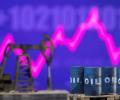
Crude oil futures surged over 3 per cent, snapping a three-session losing streak, as renewed military escalation in West Asia revived fears of supply disruptions, driving prices higher on both domestic and international exchanges.

N Chandrasekaran not only faces muted financial performance from the group's listed companies, but also mounting losses at Tata Sons' unlisted subsidiaries, many of which have been set up by him in the last decade.

'The real money in India over the coming period is likely to be made in small-cap stocks rather than in the large-cap benchmark names.'

Indian benchmark equity indices, Sensex and Nifty, ended lower after a five-day rally, with the Sensex dropping 607 points and the Nifty falling to 24,013.10. The decline was primarily driven by heavy selling in IT firms following Accenture's trimmed revenue guidance and renewed geopolitical uncertainty, specifically the postponement of US-Iran negotiations.

A potential US-Iran peace deal, expected to be signed on June 19, is anticipated to ease geopolitical stress and benefit various sectors, particularly in India, with analysts suggesting investors await finer details before making significant moves.

'The day that the market realises that they've overspent (on AI) and there's a sudden collapse in the capex, then India can start outperforming again.'

Indian stock markets are expected to remain highly sensitive to geopolitical developments, particularly the US-Iran situation, and crude oil prices this week, with analysts also highlighting the influence of the rupee-dollar trend, foreign investor activity, and upcoming inflation data.

'Mobius made EMs investable and India his most enduring belief.'

Ticket sales for the 2028 Los Angeles Olympics have surpassed 6 million, with organizers planning the next public sale for 2027, featuring new sports like flag football and squash, and the return of cricket.

Indian stock markets are set to be influenced by ongoing developments in the US-Iran conflict, fluctuations in crude oil prices, and the latest quarterly earnings reports from major corporates, with foreign investor activity also playing a crucial role.

Analysts warn that global markets are significantly underpricing the risk of an oil price shock, with Brent crude potentially soaring to $150 per barrel if the West Asia conflict escalates or damages critical oil and gas infrastructure. This could lead to severe inflation and economic repercussions, particularly for import-dependent nations like India.

Prism, the parent company of OYO, has filed updated draft papers with Sebi for a Rs 6,650 crore initial public offering (IPO) consisting entirely of a fresh issue of shares, with no offer-for-sale component from existing investors.

Bangladesh-China and Bangladesh-US relations have evolved from reluctant engagement to increasingly consequential strategic partnerships.

'With this deal, we may see even 50 launches a year within the next few years.'

Indian equities on Dalal Street saw volatility as global market trends and fresh tariff concerns linked to Donald Trump impacted investor sentiment. Track Sensex, Nifty50 movement and key market drivers for April 2, 2026.

Hospital stocks have emerged as a strong theme in 2026, outperforming benchmark indices due to robust earnings growth, improved occupancy, higher average revenue per occupied bed, and aggressive expansion plans by major chains.

ICICI Bank has successfully raised $1 billion through a five-year senior unsecured US dollar bond, marking its first public dollar bond issuance since 2017 and the largest single-tranche US dollar bond issuance by an Indian issuer so far this year.

Tata Consultancy Services (TCS) and Google Cloud have inaugurated a new Gemini Experience Center (GEC) in Mexico City. This facility, the second in Latin America and ninth globally for TCS, is equipped with over 3,000 AI agents and aims to drive industry-specific AI solutions across various sectors. It will help organisations bridge the gap between AI experimentation and implementation, enhancing innovation and data-driven decision-making in the region.
India is significantly expanding its crude oil sourcing to Latin America, with Venezuela emerging as a major supplier, as geopolitical disruptions in the Middle East and the Strait of Hormuz compel the world's third-largest oil consumer to diversify its energy supplies.

Former world No. 1 shuttler Saina Nehwal has stated that India's true measure as a 'sporting nation' will be its position in the global medals tally, not just hosting major tournaments. She highlighted the significant progress made by women in sports but emphasised the need for better financial backing, sponsorships, and comprehensive support systems including psychologists and proper coaching from an early age to nurture more champions.

Indian stock market indices Sensex and Nifty experienced a significant decline, driven by rising crude oil prices, sustained foreign fund outflows, and selling pressure in major bank stocks.
